Delivered at St. Paul’s Episcopal Church, Ironton, Mo, on August 25, 2024
Joshua 24:1-2a, 14-18; Psalm 34:15-22; Ephesians 6:10-20; John 6:56-69
We sometimes hear these days that Christians in the United States are persecuted. The truth is that we are not persecuted. Christians here are among the least persecuted groups in the free world. Christians in other countries may have to put up with the government trying to suppress them. We do not have that problem here.
But that doesn’t mean that we are not under attack. We are. But the kind of attack we are dealing with is much more difficult to deal with than simple persecution. It’s more insidious. And I’d bet the people attacking us don’t even realize they are doing it.
We are under attack by our society. And they don’t want to destroy us as such. Instead, they want to make us just…like…them.
Because let’s face it, Christians are…odd, especially Episcopalians! We are accepting. We loved everybody (or at least, we know we SHOULD). We forgive people who wrong us. We care about the poor, about people who are discriminated against, about all those who are marginalized by society.
And, generally, societies don’t tend to like that sort of thing. We are advised to fit in. To “go along to get along.” We need to “get with the program.” We need to like whoever our friends like and hate whoever our friends hate. We need to be like everybody else.
The Church in Ephesus had similar issues to deal with. Ephesus was a jewel of the Roman Empire, home of the Temple of Artemis, one of the Seven Wonders of the Ancient World. It was a bustling city, with an estimated population at this time of up to 225,000 people.
When you were a Roman citizen, certain things were expected of you. These days, being a good citizen doesn’t depend on religious observance. In the Roman Empire, it was different. There was no separation between religion and civic duty. To be a citizen in good standing meant honoring the gods – multiple gods, the gods that everyone else worshipped. Gods that included the Emperor. In Ephesus, that duty might mean making sacrifices at the Temple of Artemis: not something followers of The Way should be doing.
Paul knows what they are going through, so he gives them some guidelines for how people should prepare themselves to behave, using metaphors from the military. The example Paul uses is something people would have been familiar with. He uses armor: helmet, sword, and shield — the basic tools of a Roman soldier. He’s giving the Ephesians a structure that they can pattern their lives around, so that they can live their faith.
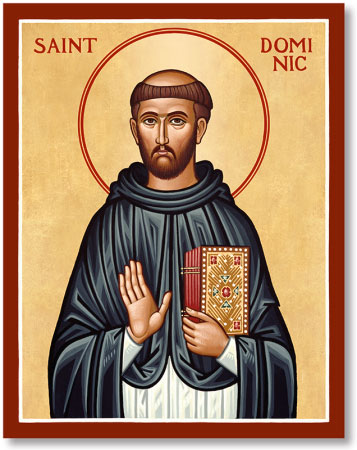
In our religious orders, we might call such a thing a “Rule of Life.” Every religious Order has a Rule of some kind, although some don’t call it that. A Rule — with a capital ”R” — isn’t a list of “dos and don’ts.” It isn’t a straight jacket. You can think of it more as a trellis. It’s a framework on which we hang our daily lives. It’s a pattern for growing our relationship with God, in order for that relationship to flower. In my own order, the Anglican Order of Preachers, the Rule includes praying the Office morning and evening every day and studying the scriptures daily. It includes staying in community with our brothers and sisters even though we are dispersed. It includes taking Eucharist at least once a week if it is available.
Personally, I think that every Christian should have a Rule of Life, because it actually helps protect you. We are buffeted by so many conflicting messages from so many different areas of life that it’s easy to forget who we are. Everything demands our attention and we can simply get lost. Creating a Rule of Life and working to LIVE that Rule helps bring us back to the center of who we are, and who we want to be in Christ. When we stray from our commitment, we have the Rule to help us work our way back.
A Rule of Life is, in effect, your own personal “armor of God.”
Bishop Deon Johnson has charged the Religious in our diocese with creating a Rule of Life for the Diocese of Missouri. This is not meant to be an imposition, but an aid to living into our Baptismal Covenant. The Rule we plan to create will be general enough that any parish can adapt it for its own special circumstance. Once the Rule is complete and accepted by the diocese, we hope to assist each parish in adapting it into their own Rule that can then be adapted by each person in the parish for their own daily use.
Now, coming up with a Rule of Life is not something you can do in 5 minutes. It takes time and discernment. We Religious in the diocese spent several months just figuring out how we were going to go about this. What we decided is that our diocesan Rule should grow organically from what people in parishes are already doing. It’s a bottom-up approach, rather than an imposition from the top down.
We need input from all the churches in the diocese, no matter how small. We hope you will help us.
Living the Christian life is not an easy thing, in any age. I would ask each of you, in the weeks to come, contemplate how you structure your life in Christ? Ask yourself, “What practices do I keep to regularly that help me strengthen My relationship with God?” You may already have the beginnings of a Rule of Life.
A Rule of Life can help solidify our walk with Christ and provide us with that armor that Paul was talking about. And I don’t know about you, but I can use all the help I can get.
Amen.

 Becoming Dominican